Koh Samui Thailand: What Makes This Island Paradise Different From the Rest
Koh Samui Thailand attracted over 1.1 million tourists in 2025, yet this island offers something distinctly different from other Thai destinations. As Thailand’s second-largest island with an area of 228.7 square kilometers, Koh Samui island Thailand balances development with authenticity in ways few tropical paradises manage. From Koh Samui best beaches like Chaweng and Lamai to mummified monks and bioluminescent waters, you’ll discover experiences that set this destination apart. This guide explores what to do in Koh Samui beyond typical island activities, revealing the unique geography, culture, and things to do in Koh Samui Thailand that make it worth choosing over countless other options.
Koh Samui’s Unique Geography and Climate
Second largest island in Thailand
Spanning 228.7 square kilometers in the Gulf of Thailand, Koh Samui claims the title of Thailand’s second-largest island after Phuket. The island stretches approximately 25 kilometers at its widest point, creating enough space for diverse ecosystems without the overwhelming scale of larger tourist destinations. Located about 35 kilometers northeast of Surat Thani town, this positioning in the Gulf creates geographic advantages that distinguish it from islands along the Andaman coast.
The island forms the centerpiece of an archipelago comprising over 80 smaller islands, including popular destinations like Koh Phangan and Koh Tao. A single 51-kilometer road encircles the bulk of the island, connecting various coastal communities while the interior remains largely untouched.
Koh Samui Year-round tropical weather patterns
Weather Koh Samui Thailand follows a tropical monsoon climate pattern that differs markedly from other southern Thai destinations. The island receives approximately 1,960 millimeters of rainfall annually, noticeably less than Phuket’s 2,220 millimeters. This drier microclimate stems from Koh Samui’s Gulf of Thailand location, which shields it from the strongest monsoon systems affecting the Andaman coast.
Temperatures hover around 28°C year-round, while humidity levels maintain a steady range between 70% and 85%. The surrounding sea temperature remains remarkably constant at 29°C throughout the year, making water activities viable during any season. Three distinct periods shape the annual weather cycle: the dry season from December through February, the hot season from March to August, and the monsoon season spanning September to November.
Heaviest precipitation typically falls between mid-October and early December. However, even during wet periods, rain showers tend to be brief yet intense, lasting just 20 to 60 minutes. This pattern means you can still enjoy sunny intervals during the rainy season, unlike destinations where persistent rainfall dominates for weeks.
Mountainous jungle interior meets pristine coastline
The central region of Koh Samui island Thailand features an almost uninhabitable tropical jungle anchored by Khao Pom, the island’s highest peak at 635 meters. This mountainous core creates microclimates across different parts of the island, with the interior influencing local rainfall and temperature patterns. Tree coverage and wildlife thrive in these protected jungle areas, offering stark contrast to the developed coastal zones.
Natural springs feed rivers that flow year-round through the terrain, though many waterfalls run dry during hot months and surge during rainy periods. The beaches vary dramatically by bay, ranging from pristine white sand to rocky shores with lush vegetation extending to the waterline.
Protected marine national parks nearby
Mu Ko Ang Thong National Park sits approximately 30 kilometers to the west, encompassing 42 islands across 102 square kilometers. This archipelago of rugged limestone formations, sinkholes, caves, and inland marine lakes earned designation as a Ramsar site in 2002, recognizing its significance as an internationally important wetland ecosystem. The park hosts seven distinct ecosystems, including dry evergreen forest, mangrove forest, seagrass beds, and coral reefs. You can reach this protected paradise via day-trip boat tours from Koh Samui, accessing emerald lagoons and limestone cliffs that define the Gulf’s most spectacular seascape.
What Makes Koh Samui Best Beaches Stand Out
Chaweng Beach: The island’s vibrant heart
Stretching approximately 7 kilometers along the eastern coast, Chaweng Beach serves as Koh Samui’s social and recreational epicenter. The beach divides into three distinct sections, each offering different experiences. North Chaweng attracts families seeking quieter surroundings with clear, calm waters ideal for swimming. Central Chaweng pulses with activity, where beach clubs, live music venues, and watersports rentals create constant motion throughout the day. South Chaweng offers wider stretches of sand perfect for morning walks, with boutique hotels and relaxed cafes replacing the central area’s intensity.
The soft, white sand receives daily maintenance from beachfront resorts, while rental stations line the shore offering jet skis, banana boats, and flyboarding. During rainy season, red flags signal dangerous currents and strong waves that make swimming unsafe. As daylight fades, the area transforms into the island’s nightlife capital, with fire shows, beach bars, and dance clubs drawing crowds well past midnight.
Lamai Beach: Balance of activity and tranquility
Koh Samui’s second-largest beach extends over 4 kilometers along the southeastern coast, offering golden sand and crystal-clear waters. While sand quality doesn’t quite match Chaweng’s fine texture in some areas, the water deepens more quickly, providing better swimming space.
Three distinct zones shape the Lamai experience. Northern Lamai features budget-friendly to mid-range accommodations in a fairly quiet, isolated setting suited for families. Central Lamai brings a mix of mid-range to luxury resorts with abundant restaurant and bar choices, making it the busiest zone for swimming, kayaking, paddleboarding, and jet skiing. Southern Lamai’s dramatic seaside boulders create photographic backdrops, though rocky geology makes this area better for sightseeing than swimming.
Bo Phut: Traditional fishing village charm
Nestled on the northern coast, Bophut’s Fisherman’s Village traces its history to early Chinese settlers who built traditional wooden shophouses along narrow streets. These architectural remnants of the island’s fishing heritage now house trendy restaurants, boutique shops, and beach bars.
Bophut Beach stretches along the village, with resorts maintaining the fine sand despite occasional small pebbles. The calm, clear waters provide lovely views across to Koh Phangan, while beachfront dining options range from casual restaurants to romantic candlelight dinners on the sand. Every Monday, Wednesday, and Friday, roads close for the Walking Street night market featuring handicrafts, street food, and live entertainment including Muay Thai demonstrations and fire dancers.
Lipa Noi and Taling Ngam: Untouched western shores
The western coastline offers dramatically different experiences from the bustling eastern beaches. Lipa Noi features fine white sand with shallow waters extending up to 100 meters out, creating safe conditions for children. This residential area attracts an older demographic seeking family-friendly atmosphere without party scenes. Beachside restaurants like Big John Seafood serve Thai cuisine and fresh catches right on the sand’s edge.
Further south, Taling Ngam Beach remains largely spared from mass tourism, with pristine sand and enchanting views across to the Five Islands. A tropical jungle towers over the creamy-colored beaches, where up to 10 beachside restaurants serve meals and cocktails as sunsets paint the horizon with silhouettes of nearby islands and Ang Thong National Marine Park. The beach maintains its natural character despite hosting a few luxury resorts including the InterContinental.
Cultural Heritage That Sets Koh Samui Apart
Beyond the beaches lies a cultural tapestry woven from Buddhist spirituality, ancient traditions, and fishing heritage that distinguishes Koh Samui Thailand from other tropical destinations. Buddhist temples dot the island landscape, yet the spiritual landmarks here carry stories and practices you won’t encounter elsewhere.
Mummified monk at Wat Khunaram
Wat Khunaram houses one of Thailand’s most remarkable spiritual displays. The mummified body of Luang Pho Daeng sits in a glass casket, preserved in the meditation position he held when he died in 1973. Born in 1894, he ordained as a monk around age 20, later disrobed to marry and raise a family, then returned to monastic life at 50.
His meditation mastery became legendary among followers. At 79, Luang Pho Daeng predicted his own death and gave specific instructions: cremate him if his body decayed, but display it in a glass case if preservation occurred. During his final week, he consumed nothing while maintaining continuous meditation. Remarkably, his body shows minimal decomposition despite the hot, humid climate that typically accelerates decay. Sunglasses now cover his eyes, a considerate addition by caretakers to make the display less disturbing for visitors. Local Buddhists visit regularly to make merit and pray, treating the preserved monk as tangible proof of spiritual attainment through disciplined meditation.
Big Buddha temple and spiritual landmarks
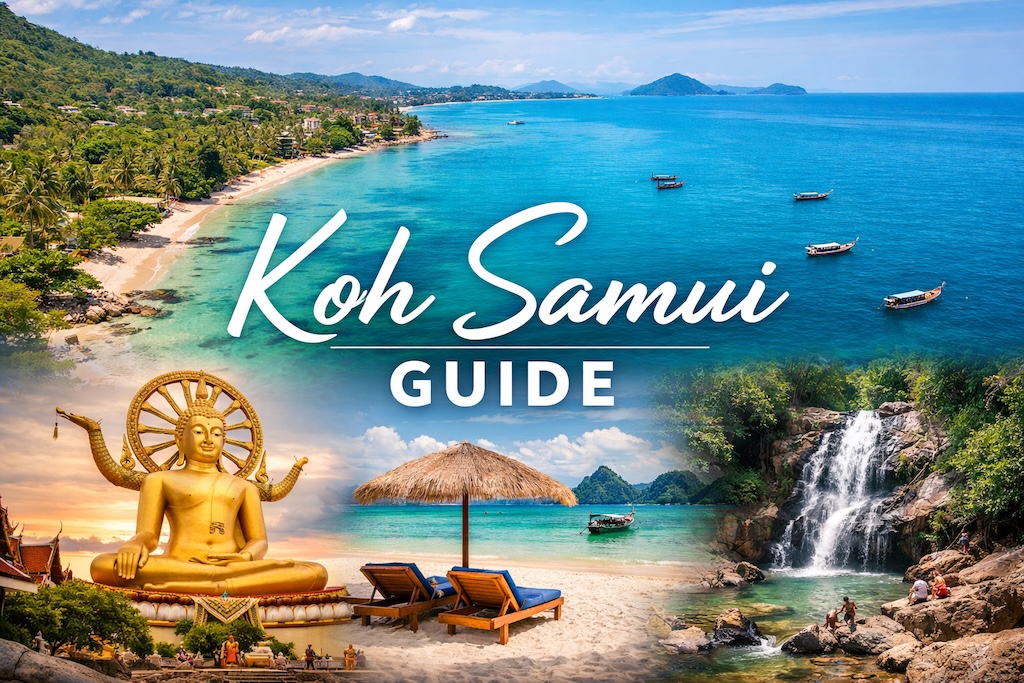
Wat Phra Yai, known locally as Big Buddha Temple, commands attention from its position on a small rocky island connected to Koh Samui by a causeway. The 12-meter golden Buddha statue dominates the skyline, visible from several kilometers away, including from incoming flights. Built in 1972, this monument represents enlightenment and serves as the island’s most recognized spiritual symbol.
The temple grounds blend tranquility with accessibility. Steps lead upward to the statue platform, where sea breezes mix with rhythmic chanting. Markets nearby sell local crafts and street food, creating a lived-in spiritual space rather than a sterile monument. Other temples scattered across Koh Samui include Wat Samret, over 200 years old, and Wat Plai Laem, which blends Thai and Chinese architectural influences.
Koh Samui Local dialect and traditional customs
Koh Samui maintains its own specific dialect, distinct from Bangkok Thai and Isaan regional speech. This linguistic uniqueness extends to customs and ceremonies preserved through generations. The Loy Khro ritual involves launching bamboo boats floating on immature coconuts into the sea, carrying hair, nail clippings, and offerings meant to cast away misfortune. Gin Hor continues the Southern Thai tradition of communal food sharing during temple fairs and beach gatherings. Before village shrines each June, residents perform Lah Pho Ta, honoring guardian spirits with savory and sweet offerings, followed by traditional Manora performances.
Authentic fishing village communities
Fisherman’s Village in Bophut preserves architectural heritage through teak shophouses built by early Chinese-Hainanese settlers. These structures blend Chinese merchant traditions with French colonial influences, creating a distinctive waterfront character. Morning walks through narrow lanes before tourist crowds arrive reveal the authentic fishing community foundation. Hua Thanon, another Chinese-Hainanese settlement, features Thailand’s tallest Guan Yu statue, marking its historical roots in maritime trade.
Things to Do in Koh Samui Thailand Beyond the Beach
Jungle-covered mountains and protected marine reserves create adventure opportunities that extend well past the shoreline.
Na Muang waterfalls and jungle exploration
Two distinct cascades bear the Na Muang name, each offering different experiences. Na Muang 1 drops 18 meters into a large plunge pool suitable for swimming, accessible via a short 5-minute paved trail from the parking area. The waterfall area includes toilets, snack stalls, and paid parking at 20 THB.
Na Muang 2 rises to 80 meters, requiring a more challenging approach along a 2.7-kilometer round-trip trail with approximately 260 meters of elevation gain. Steep sections use ropes for assistance, passing through rocky pools and lookout points offering views to the coastline. Entry costs 50 THB plus parking fees ranging from 30 to 60 THB. Water flow peaks during and immediately after the rainy season from October through January, though trails become slippery.
Secret Buddha Garden in the hills
Perched at about 300 meters altitude in central Koh Samui, the Secret Buddha Garden showcases hand-sculpted statues created by local farmer Nim Thongsuk starting in 1976 at age 77, continuing until his death at 91. The secluded sculpture park features intricately carved Buddha statues, mythical figures, animals, and celestial beings scattered throughout jungle pathways. Waterfalls and streams flow through the grounds, surrounded by dense tropical flora.
Entrance fees typically range from 50 to 80 Baht per person. The remote location requires navigating narrow, unpaved roads not recommended for regular cars or inexperienced motorbike riders. Morning or late afternoon visits avoid midday heat, while weekdays offer fewer crowds.
Bioluminescent waters phenomenon
Microscopic organisms create natural light shows in coastal waters through chemical reactions when disturbed. The phenomenon appears most vividly during new moon phases from April to November, when darkness and calm waters enhance visibility. While bioluminescent plankton occurs in areas around Ang Thong National Park, sightings depend on conditions including water temperature and lack of light pollution.
Day trips to Ang Thong Marine National Park
The protected archipelago of 42 islands lies approximately 30 kilometers west. Standard tours include snorkeling among coral reefs, kayaking along coastlines and through hidden lagoons, and hiking nature trails to panoramic viewpoints. Koh Mae Ko features the Emerald Lake, a pristine saltwater lagoon separated from the sea by limestone ridges, reached via steep trail. Park entrance fees cost 300 Thai Baht for adults and 150 Thai Baht for children. Book your Ang Thong Marine Park Tour Here
Diving and snorkeling at nearby islands
Excursion prices vary by destination: 1,200 to 1,500 THB for trips to Koh Phangan, while full excursions to Koh Tao, Koh Nang Yuan, or Ang Thong with lunch range from 1,800 to 2,500 THB.
Practical Differences: What Travelers Should Know
Logistical realities on Koh Samui differ significantly from mainland Thailand and other island destinations.
Privately owned boutique airport
Samui International Airport operates as a privately owned facility run by Bangkok Airways, opened in 1989. The open-air design features coconut palm wood construction and wall-less pavilions, creating a resort-like atmosphere. This boutique approach means limited airline competition and higher ticket prices.
Higher prices compared to other Thai islands
Flight prices run 25-40% higher than equivalent Phuket routes due to limited airline competition. Accommodation costs rank as the highest in Thailand, surpassing even Phuket. Luxury monthly living expenses range from 120,000 to 400,000 THB.
Koh Samui population and local community
The island houses approximately 57,845 residents as of 2010, though current estimates suggest around 63,000 people.
Best time to visit Koh Samui based on weather patterns
Dry season spans December through February with temperatures between 25°C and 30°C. Rainy season runs September to November with brief, intense showers.
Conclusion
Koh Samui offers a combination you won’t find elsewhere in Thailand. Unlike typical beach destinations, this island balances vibrant resort areas with untouched jungle interiors, spiritual landmarks that hold genuine cultural significance, and marine parks just offshore. The higher costs reflect what you’re paying for: a boutique airport experience, diverse beaches from party hubs to quiet fishing villages, and unique attractions like mummified monks and bioluminescent waters.
By and large, Koh Samui rewards travelers seeking authenticity alongside modern amenities. Choose your season carefully, plan your budget accordingly, and you’ll discover why this Gulf island attracts millions while maintaining its distinctive character.
FAQs
Q1. What makes Koh Samui different from other Thai islands? Koh Samui stands out as Thailand’s second-largest island with a unique combination of pristine beaches, mountainous jungle interior, and authentic cultural heritage. Unlike other destinations, it features distinctive attractions like mummified monks, bioluminescent waters, and protected marine parks nearby, while maintaining traditional fishing villages alongside modern resort areas.
Q2. Which beaches in Koh Samui are worth visiting? Chaweng Beach offers the most vibrant atmosphere with watersports and nightlife, while Lamai Beach provides a balance of activity and tranquility with golden sand. For traditional charm, Bophut’s Fisherman’s Village features historic wooden shophouses, and the western shores of Lipa Noi and Taling Ngam remain largely untouched with pristine conditions perfect for families.
Q3. When is the best time to visit Koh Samui? The ideal time to visit is during the dry season from December through February, when temperatures range between 25°C and 30°C with minimal rainfall. The rainy season runs from September to November, though showers are typically brief and intense rather than persistent, allowing for sunny intervals throughout the day.
Q4. What activities can you do in Koh Samui besides beach relaxation? Beyond the beaches, you can explore Na Muang waterfalls, visit the Secret Buddha Garden with hand-carved statues in the hills, take day trips to Ang Thong Marine National Park for kayaking and snorkeling, and experience bioluminescent waters during new moon phases. Cultural sites include the Big Buddha temple and Wat Khunaram with its preserved mummified monk.
Q5. Is Koh Samui more expensive than other Thai islands? Yes, Koh Samui typically has higher prices compared to other Thai destinations. Flight costs run 25-40% higher than equivalent routes to Phuket due to the privately owned boutique airport, and accommodation costs are the highest in Thailand. However, these prices reflect the island’s unique amenities, diverse attractions, and well-maintained infrastructure.