Koh Samui Real Estate: The Essential Guide to Buying Property in Paradise (2026)
Koh Samui real estate presents remarkable diversity, with property options ranging from $30,000 studio condominiums to multi-million dollar beachfront villas. The island has transformed from a backpacker destination into a mature market attracting international investors, retirees, and holidaymaker’s. After experiencing steady growth over the past decade, the market now offers improved infrastructure, modern amenities, and strong tourism recovery. This comprehensive guide walks you through understanding the Koh Samui real estate for sale market, legal ownership structures for foreign buyers, the step-by-step buying process, and investment return potential.
Koh Samui Real Estate Guide: Understanding the Market and Why to Invest
The market has reached a pivotal stage where international recognition meets structural scarcity. Foreign buyer transfers in Surat Thani province surged 220% in 2025, marking the highest growth rate of any Thai province and signaling a shift from secondary interest to genuine international demand.
Strong tourism foundation and lifestyle appeal
Tourism drives the core value proposition. Samui International Airport recorded more than 1.4 million passengers from January to June 2026, representing a 22% increase from the same period in 2023 and confirming full recovery from pandemic impacts. Bangkok Airways plans to increase flights from 50 to 73 per day to accommodate demand, with the airport currently offering 27 routes connecting to 20 destinations.
Extended operating hours could add 2,000 daily tourists, potentially increasing annual visitors by 10-20% from the 3.4 million recorded previously. Peak season hotel and villa occupancy rates reach 80-90% during July and August, creating consistent rental demand that translates directly into investment returns.
The island has evolved beyond resort-only appeal into a hybrid lifestyle and investment market combining holiday rentals, digital nomad accommodation, and long-term expatriate residency. Post-pandemic demand shifted toward private pool villas, hillside sea-view homes, and gated communities with professional management.
Koh Samui Real Estate Diverse property options for different budgets
Property diversity spans the full investment spectrum. Entry-level options begin below ฿10 million THB, offering modern turnkey properties including private pool villas, sea-view apartments, and spacious townhouses. Villas represent 48% of residential listings, while condominiums account for 52%, though villas remain the signature product attracting most foreign buyer attention.
Well-located, professionally managed luxury villas with 3-4 bedrooms, private pools, and sea views deliver gross rental yields between 7% and 12% annually. After deducting operating costs of 20-30%, net yields average 4.5% to 8%. Premium four-bedroom sea-view villas in Bophut or Chaweng Noi range from THB 10-18 million (USD 280,000-500,000).
Infrastructure development and accessibility improvements
Several major projects strengthen long-term investment fundamentals. The Samui Airport expansion will upgrade capacity to handle Airbus A320 aircraft and 6 million passengers annually, with construction planned for 2025-2027. A new underwater pipeline commissioned in 2025 delivers up to 24,000 m³ of fresh water daily, addressing resource constraints during peak seasons.
The proposed Samui sea-bridge connecting the island to the mainland spans 22-29 kilometers with an investment estimate of 25,000-50,000 million baht. Cabinet approval is anticipated in late 2026 at the earliest, scheduled for 2029-2033 completion. A cruise terminal development targeting 180,000 annual tourists has an official completion date of 2032.
Relative affordability Real Estate compared to other Thai destinations
Pricing remains competitive against comparable markets. Properties cost 30-40% less than equivalent Phuket offerings, with price per square meter in city center areas at 65,000 THB compared to Phuket’s 120,000 THB. A luxury four-bedroom sea-view villa priced around USD 400,000-500,000 in Samui could cost USD 800,000+ in Phuket’s premium zones.
Strict building regulations limiting heights and coastal proximity preserve the island’s exclusive character while creating structural supply constraints. This scarcity protects investment value and drives premium pricing power for quality properties, positioning Koh Samui real estate for sustained appreciation as infrastructure gaps narrow.
Types of Koh Samui Real Estate for Sale and Popular Locations Guide
Property inventory on the island divides into three distinct categories, each serving different investment strategies and ownership requirements. Understanding these segments helps you match your budget and goals with the right asset class.
Villas and houses: privacy and beachfront living
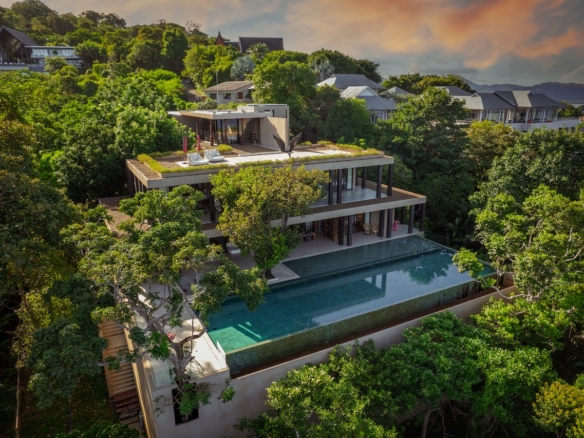
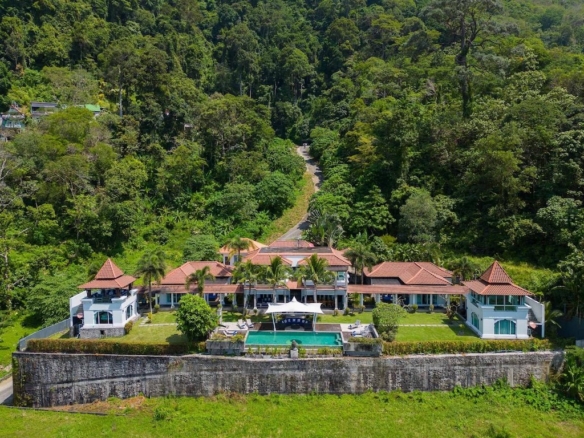
Villas command the largest share of foreign buyer attention and occupy 48% of residential listings. Entry-level garden-view villas with pools start at 5 to 6 million THB, while properties with elevated views or beach proximity require substantially higher capital. Sea-view villas begin around 12 to 14 million THB, reflecting limited coastal geography and consistent demand for ocean vistas.
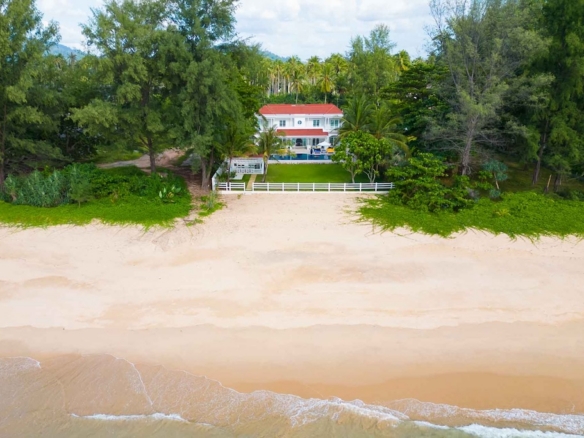
Beachfront villas form the premium tier, starting from 40 to 50 million THB for direct beach access. Property sizes span from compact two-bedroom houses at 130 square meters to luxury estates exceeding 635 square meters. Most include private swimming pools, multiple bathrooms, and outdoor living spaces designed for tropical climate. Foreign buyers access villa ownership through 30-year leasehold agreements or Thai Limited Company structures, since direct land ownership remains prohibited.
Condominiums: simplified ownership for foreigners
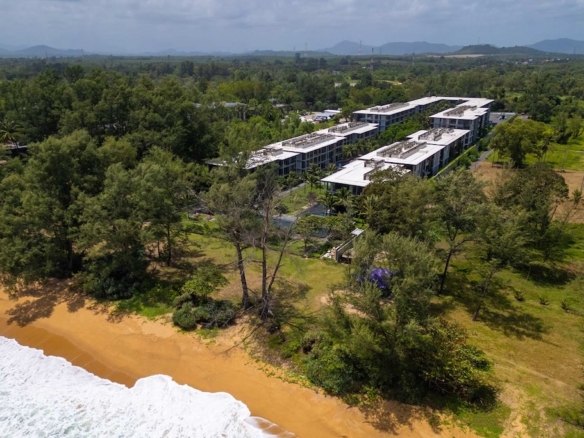
Condominiums provide the most straightforward acquisition path for foreign investors. Studio units around 30 square meters start from 1.8 million THB. One-bedroom units ranging from 50 to 70 square meters represent the most popular category, balancing affordability with functional space. Two-bedroom condominiums span 75 to 145 square meters with pricing from 7 to 18 million THB depending on location and sea views.
Island zoning regulations limit high-rise construction, resulting in fewer large-scale developments compared to Bangkok or Phuket. This supply constraint maintains pricing stability and creates waiting lists for units in sought-after projects. You must verify current foreign quota status before committing, as buildings at the 49% threshold cannot accommodate additional foreign freehold registrations.
Koh Samui Land plots: building your custom property
Raw land parcels offer maximum design freedom but require navigating zoning regulations. Plot sizes range from compact 224 square meter parcels to expansive estates exceeding 20,000 square meters. Entry-level hillside plots start from 1,500,000 THB, while mid-range land with partial sea views prices between 4 to 12 million THB for 400 to 2,400 square meter plots. Premium sea-view and beachfront land commands 15 to 65 million THB or more in established areas.
Chaweng: high rental demand and resale liquidity
Chaweng functions as the island’s commercial center, featuring the longest beach stretching 7 kilometers. Central Festival Samui anchors the area with over 200 retail outlets, while Bangkok Hospital Samui and multiple international schools position it as the primary hub. High rental demand stems from consistent tourist footfall, supporting occupancy rates that justify premium valuations.
Bophut and Lamai: balanced lifestyle options
Bophut blends traditional charm through its preserved Fisherman’s Village with modern amenities including The Wharf Samui lifestyle mall spanning over 5,000 square meters. Recent developments include Anava Samui condominium starting from 3.6 million THB and Level Residence Villas from 7.3 million THB. Lamai offers wellness centers, yoga studios, and ocean-facing villas in a quieter environment than Chaweng while maintaining strong rental appeal.
Koh Samui Real Estate: Emerging areas with growth potential
Plai Laem delivers unbeatable ocean views from hillside villas near the Big Buddha, while Bang Por offers stunning sunsets with land prices remaining reasonable compared to neighboring areas. Choeng Mon provides upscale privacy close to the airport and luxury resorts. Mae Nam gains popularity with good local character and central north coast positioning.
Koh Samui Real Estate Guide: Legal Ownership Options for Foreign Buyers
Foreign ownership restrictions shape every purchase decision in the Koh Samui real estate market. Understanding the four primary legal structures determines whether you can complete your transaction and what rights you acquire.
Freehold condominium ownership under foreign quota
Foreigners can own condominium units outright in their own name, provided total foreign ownership does not exceed 49% of the building’s total saleable area. The remaining 51% must be owned by Thai nationals or Thai entities. This quota is calculated per building based on usable floor space, excluding common areas.
You must transfer the full purchase price into Thailand as foreign currency and obtain a Foreign Exchange Transaction (FET) form from the receiving Thai bank. This documentation is required at the Land Office during ownership registration. If the foreign quota is already fully occupied, you cannot buy the unit under freehold. Always verify quota availability with the building’s juristic office or developer before signing any contract.
Thai limited company structure for land and villas
A Thai Limited Company with majority Thai ownership can legally purchase land and villas. Thai nationals must own at least 51% of shares, while foreigners can hold up to 49%. However, using Thai shareholders as nominees who hold shares solely to facilitate foreign ownership is illegal under both the Land Code Act and Foreign Business Act.
The company must engage in real business activities beyond just holding land, such as property rental or management. Companies without business purpose are not recognized under Thai law and may be dissolved. Land offices investigate shareholders and funding sources when foreign shareholders attempt to register land. In May 2006, authorities began enforcing additional checks to prevent land registration by companies with foreign shareholders using nominee structures. The Department of Business Development now requires proof of capital from Thai shareholders when registering a company with any foreign involvement.
30-year leasehold agreements and renewal terms
Foreigners can lease land for a maximum of 30 years under Section 540 of the Civil and Commercial Code. Any agreement stating a longer period is automatically reduced to 30 years. Renewal clauses for additional 30-year terms are contractual promises, not guaranteed legal rights.
These renewal options are not binding on third parties. If the land is sold during your lease term, the new owner is only bound by the original 30-year registered lease and is not obligated to honor renewal promises made by previous owners. Supreme Court Case No. 4655-2566 held that pre-agreed automatic renewals unlawfully circumvent the 30-year cap and are therefore void.
Understanding land title types: Chanote vs Nor Sor 3
Chanote (Nor Sor 4 Jor) is the highest form of land title in Thailand, certifying full private ownership with GPS-surveyed boundaries. Only Chanote land can be legally subdivided for residential development or condominium projects. Nor Sor 3 Gor confirms a right to use land based on official survey with exact boundaries and can be upgraded to Chanote upon re-survey. Nor Sor 3 confirms legitimate possession without accurate survey or fixed boundary lines, carrying higher encroachment risk.
The Step-by-Step Guide for Buying Property in Koh Samui
Executing a purchase in the Koh Samui real estate market follows established procedures that protect both buyers and sellers when completed correctly. The timeline spans 30 to 60 days for straightforward resale condominiums, while land or villa purchases may take longer due to complex documentation requirements.
Koh Samui Real Estate search and shortlisting your options
Working with a professional agent familiar with the island saves time by filtering properties matching your criteria and budget. Agents provide access to developer inventory, resale listings, and off-market opportunities while negotiating prices on your behalf. Physical site visits reveal critical details including location proximity to amenities, property condition, views, and neighborhood noise levels.
Making an offer and reservation deposit
Accepted offers require a reservation deposit to secure the property and remove it from market availability. Deposits typically range from 50,000 to 200,000 THB for condominiums or approximately 1% of the purchase price for resale units. This payment reserves the property while you complete due diligence, with refund conditions depending on contract terms.
Due diligence: title verification and legal checks
Engage an independent Thai property lawyer before signing binding documents. Your lawyer verifies the title deed at the Land Office, confirming legitimate ownership and searching for encumbrances including mortgages, liens, leases, or other registered claims. Building permit verification ensures structural compliance with zoning laws, while condominium buyers must confirm foreign quota availability.
Signing the sales and purchase agreement
The Sales and Purchase Agreement defines all transaction terms including price, payment schedule, completion dates, and default remedies. Your lawyer should draft or review this contract in both Thai and English versions, as the Thai version holds legal authority. For off-plan properties, milestone-based payment clauses protect your capital by linking installments to construction progress.
Payment schedule and fund transfer requirements
Resale transactions typically require full payment via cashier’s check at the Land Office during transfer. Off-plan purchases follow developer payment schedules, usually 10-20% upon contract signing followed by construction milestone installments and 50% final payment at completion. Foreign buyers must transfer funds into Thailand in foreign currency and obtain a Foreign Exchange Transaction (FET) form from the receiving bank for amounts exceeding 50,000 USD.
Completing ownership transfer at the land office
Both parties attend the Land Office with required documentation including passports, FET forms, the signed agreement, and title deeds. Transfer fees, stamp duty, and specific business tax are paid at this appointment. The Land Officer endorses the title deed with your name, completing the legal ownership change within 2 to 4 weeks.
Koh Samui Real Estate Guide: Costs, Financing, and Investment Returns
Understanding total investment costs separates successful buyers from those facing unexpected expenses. Financial planning for Koh Samui real estate encompasses initial government charges, financing structures, operational overhead, and return projections.
Transfer fees, taxes, and government charges
Government fees total 2.5% to over 6.3% of the property’s assessed value. The transfer fee is 2% of assessed value, typically split equally between buyer and seller. Specific Business Tax at 3.3% applies when sellers owned the property less than five years, while Stamp Duty at 0.5% applies for longer ownership periods. Withholding tax varies based on seller type and holding duration. Temporary government stimulus reducing transfer fees to 0.01% excludes foreign buyers entirely.
Mortgage options and developer financing
Thai retail banks generally decline foreign applicants unless holding long-term work permits. UOB offers International Property Loans with 60-70% LTV ratios, while ICBC provides 50-70% LTV for offshore income earners. MBK Guarantee requires no income proof but charges 8-10%+ interest with 1-10 year terms. Standard foreign mortgage rates range 6-8% annually with 15-25 year maximum terms. Some developers provide in-house financing with flexible structures.
Ongoing expenses: management and maintenance
Property management fees consume 15-20% of gross rental income. Condominium maintenance fees range 40-70 THB per square meter monthly. Villa operational costs include staff salaries at 240,000-480,000 THB annually, marketing commissions at 5-10% of revenue, and legal administration at 30,000-50,000 THB yearly. Total operating costs typically absorb 20-30% of gross rental revenue.
Koh Samui Rental yields and seasonal occupancy rates
Well-managed luxury villas generate gross rental yields between 7-12% annually[481]. After operating expenses, net yields average 5-8%. Average gross rental yield across Koh Samui villas is 7.1%, with net yields around 5.4%. Peak season occupancy reaches 70-90%, while annual occupancy averages 80%. Choeng Mon four-bedroom villas deliver 7.9% gross and 6.2% net yields, the highest tracked returns.
Capital appreciation potential in prime areas
Prime land prices demonstrated 5-10% average annual appreciation over the past decade. High-end sea-view luxury villas experienced 5-12% annual appreciation rates over five years. For 2026, forecasts project 7-9% increases, particularly in Bophut, Chaweng Noi, and Choeng Mon. Limited titled land supply with strict building regulations creates structural scarcity protecting investment value.
Koh Samui Real Estate Guide: Conclusion
This Koh Samui Real Estate Guide equips you with the essential knowledge to make informed investment decisions on Thailand’s premium island destination. The market delivers compelling fundamentals: consistent rental yields between 7-12%, capital appreciation potential of 5-10% annually, and pricing 30-40% below comparable Phuket properties. Consequently, your success depends on selecting the right ownership structure, working with qualified legal counsel, and conducting thorough due diligence.
Whether you’re targeting a beachfront villa, managed condominium, or development land, the combination of strong tourism recovery, infrastructure improvements, and supply constraints positions quality properties for sustained performance. Apply the frameworks outlined here to navigate the buying process confidently and secure your piece of island paradise.
Start your Koh Samui property search here
FAQs
Q1. Can foreigners own property outright in Koh Samui? Foreigners can own condominium units outright in their own name, provided the total foreign ownership doesn’t exceed 49% of the building’s total saleable area. For villas and land, foreigners must use alternative structures such as 30-year leasehold agreements or Thai Limited Companies, as direct land ownership by foreigners is prohibited in Thailand.
Q2. What are the typical rental yields for investment properties in Koh Samui? Well-managed luxury villas in Koh Samui generate gross rental yields between 7-12% annually. After deducting operating costs of 20-30%, net yields typically average 5-8%. The average gross rental yield across all villas is approximately 7.1%, with net yields around 5.4%, depending on location and property management quality.
Q3. What are the total costs involved when buying property in Koh Samui? Government fees and taxes total between 2.5% to over 6.3% of the property’s assessed value. This includes a 2% transfer fee (usually split between buyer and seller), either 3.3% Specific Business Tax or 0.5% Stamp Duty depending on ownership duration, and withholding tax. Foreign buyers must also budget for legal fees and ongoing maintenance costs.
Q4. Which areas in Koh Samui offer the best investment potential? Chaweng offers high rental demand and strong resale liquidity as the island’s commercial center. Bophut and Choeng Mon provide balanced lifestyle options with premium pricing, while emerging areas like Plai Laem, Bang Por, and Mae Nam offer growth potential with more reasonable land prices. Properties in Bophut, Chaweng Noi, and Choeng Mon are forecast to see 7-9% price increases in 2026.
Q5. How long does the property buying process take in Koh Samui? The timeline typically spans 30 to 60 days for straightforward resale condominiums. Land or villa purchases may take longer due to more complex documentation requirements. The process includes property search, reservation deposit, due diligence and legal checks, signing the sales agreement, payment transfers, and final ownership transfer at the Land Office.