Koh Samui Villa Market: What Property Investors Need to Know
The Koh Samui villa market is one of the ever-changing real estate segments in Thailand. Villas now dominate new luxury listings and account for over 90% of the high-end market. You might eye short-term rental yields of 8-12% annually or long-term capital appreciation rates of 5-12%. Understanding current market dynamics is everything in your investment success. Average prices for Koh Samui villas for sale range from 10-20 million THB for standard properties to over 50 million THB for luxury offerings. This piece covers everything to help you seize this chance in 2026.
Koh Samui Villa Market Overview in 2026
Current Market Conditions and Tourism Trends
Koh Samui has evolved beyond its previous status as a “tropical alternative” to Phuket. The island now operates as a mature, sophisticated market benefiting from infrastructure upgrades, limited land supply, and changing work patterns. Tourism has surpassed pre-pandemic levels, with air arrivals exceeding 2.78 million in 2024, representing a 21% year-on-year increase. The island welcomed over 3.5 million visitors in 2023, with a near-equal split between domestic and international arrivals.
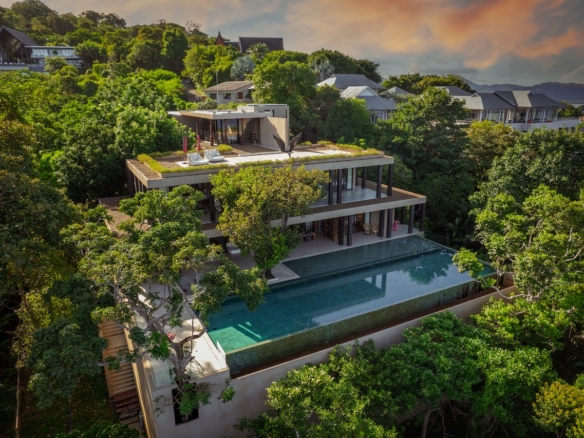
The Koh Samui villa market is different from Phuket in one key aspect: strict building regulations limiting construction to three floors with a maximum height of 12 meters have preserved the island’s exclusive, low-density character. Prime beachfront land in Phuket has reached price ceilings in many areas, but Koh Samui villas for sale still offer lower entry points with higher headroom for capital growth.
Airport expansion targeted for 2027 completion, along with increasing direct international flights, is closing the accessibility gap. Projects totaling THB 51.64 billion are enhancing the island’s appeal through infrastructure improvements. The proposed sea-bridge connecting the island to the mainland and the government-backed cruise terminal development want to attract higher-spending tourists.
Supply and Demand Dynamics
Developers are launching new villa projects at a pace not seen since the mid-2000s, with villa launches hitting a 15-year high. New-build properties account for an estimated 30 to 40% of all residential listings currently available, with new villa projects more common than new condo developments. Bophut alone accounts for roughly 70% of new project supply.
Land prices have jumped approximately 10% due to increased activity. Supply is rising but demand is running ahead. The villa rental market saw a 34% year-on-year surge in supply, bringing the total to 3,055 properties as of January 2025. Occupancy rose 5.7 percentage points to 71.5% despite this increase.
Villas and houses make up around 65% of Koh Samui listings, with condos at 25% and apartments around 7%. This reflects the island’s focus on standalone tropical living. The most common price band is 10-15 million THB, followed by 15-20 million THB. The average listing price sits at 30.5 million THB, though luxury estates priced between 200-400 million THB skew this figure heavily.
Price Ranges for Different Villa Segments
The Koh Samui villa market operates through distinct price tiers:
- Standard villas: 10-20 million THB, featuring 2-3 bedroom pool villas averaging 14.5 million THB
- Premium villas: 20-50 million THB, offering 3-5 bedroom sea-view properties averaging 28 million THB
- Luxury villas: 50 million THB and above, with beachfront or ultra-prime estates averaging 75 million THB
Price per square meter ranges from 80,000 to 160,000 THB, still lower than Phuket. Median home prices sit around 10.5 million THB, but the average jumps to 18 million THB because luxury sea-view villas pull the numbers up by a lot. Properties have risen roughly 4% in the last year. The island has seen steady 5-12% annual appreciation in land value over five years, with forecasts projecting 7-9% increases for 2026, especially when you have properties in Bophut, Chaweng Noi, and Choeng Mon.
Properties incorporating eco-luxury features such as solar panels and rainwater harvesting are seeing a 15% premium in rental rates. The change toward “workations” has stabilized rental income, with high-end villas no longer relying solely on one-week holidaymakers.
Understanding Villa Investment Returns in Koh Samui
Rental Yield Expectations
Returns in the Koh Samui villa market vary substantially based on property management quality and location. Well-managed luxury pool villas in prime areas generate 8-14% net annual yield, while the broader market sees net returns between 6-8%. Gross rental yields range from 6-12% each year, with premium beachfront properties achieving the higher end of this spectrum.
Your actual income depends on occupancy rates. Properties in prime areas target 70-85% annual occupancy and rise to 85-95% during high season from December through April. The island-wide average sits at 71.5%, even with increased villa supply. Well-managed properties in popular areas like Bophut and Maenam achieve stronger occupancy through guest screening and professional check-in procedures.
Net yield calculations account for management fees, licensing compliance, maintenance and all operating costs. A well-located 4-bedroom luxury villa valued at 30 million THB with 70% occupancy and an average nightly rate of 14,000 THB generates around 3.57 million THB in gross annual rental revenue. This translates to an 11.9% gross yield. The net rental yield settles between 5-8% after operating expenses.
High-end rentals command nightly rates of 17,211-51,635 THB during peak season, but luxury villas rely on higher rates with fewer bookings. This creates more variability compared to mid-range properties.
Capital Appreciation Potential
Capital appreciation has averaged 8-12% each year in the last five years. Limited land supply, increasing international demand and strict building regulations drive this growth. Historical data indicates property prices rising 5-7% each year, with beachfront villas appreciating 5-10% in just the past year.
Forecasts project 7-9% appreciation for 2026, especially in Bophut, Chaweng Noi and Choeng Mon. High-end sea-view villas have experienced the strongest appreciation rates over a five-year investment horizon due to structural factors: limited supply from height restrictions, ongoing infrastructure investment including airport expansion, and the island’s transition to a high-net-worth lifestyle hub.
Operational Costs and Net Returns
Fixed costs run whether rental income flows or not. Management fees consume 20-25% of rental income, though the 15-20% range is standard for professional services. Annual operating costs for a 25 million THB villa include maintenance and utilities (200,000-400,000 THB), insurance and taxes (100,000-200,000 THB), and marketing services (5-10% of rental income).
Monthly expenses add up: pool maintenance costs 3,000-6,000 THB, garden care requires 2,000-5,000 THB, and estate management fees range from 8,000-25,000 THB for premium developments. You should budget 1-2% of property value each year as a technical reserve for major replacements. Insurance premiums run 0.2-0.5% of property value each year, while land and building tax remains minimal at 0.02-0.3% of government appraisal value.
Total annual operating costs for luxury villas reach 1.2-1.5 million THB. Personal income tax applies to rental earnings at rates from 5-35%, while corporate structures face 15-20% tax on net profits.
Best Locations for Villas in the Koh Samui Market
Location determines everything in the Koh Samui villa market. Your choice between beachfront exclusivity and hillside value affects rental demand, appreciation potential and long-term returns.
Choeng Mon operates as the island’s luxury enclave, with a median list price of ฿28,333,032 for houses and villas. This area delivers gated community living with adjacency to 5-star resorts. High-net-worth individuals and security-conscious families find it attractive. The limited development and high-end positioning support strong value retention. Properties here put you within walking distance of Choeng Mon Beach and you retain privacy through exclusive estates.
Plai Laem offers contemporary pool villa developments at more available entry points. Luxury 3-bedroom villas range from ฿14,600,000 to ฿14,900,000, while 4-bedroom options span ฿15,300,000 to ฿18,100,000. The area features award-winning architectural designs and sea-view properties positioned close to the Big Buddha and beachfront amenities.
Bophut stands out in the Koh Samui villa market for its upscale lifestyle appeal. The area’s “Golden Triangle” location balances residential comfort with immediate access to key attractions and supports high occupancy rates year-round. Your guests reach the beach and ferry piers in 3 minutes, the airport in 5 minutes. Destinations like Big Buddha and Chaweng Night Market sit within 6-10 minutes. Fisherman’s Village itself delivers sophisticated dining and boutique shopping. International school access comes within a walkable setting.
Chaweng Noi ranks among the most sought-after areas for Koh Samui villas for sale. Properties here place you within 5-6 minutes’ walk to Chaweng Beach and excellent beachfront restaurants. Panyadee International School sits just 2 minutes away by car, along with Bangkok International Hospital.
Lamai provides balanced investment value with prices 20-30% lower than Chaweng and keeps strong rental demand. New villa developments in this area offer 8-14% ROI through rental income and asset growth. The southern location combines family-friendly atmosphere with investment potential. Long-stay families and retirees find it attractive. Properties range from ฿7.5 million for pool villas to ฿16.9 million for ultra-exclusive beachfront developments.
Maenam delivers 30-40% lower entry prices compared to east coast alternatives and keeps beach access with local Thai community character. Three-bedroom pool villas here start at ฿16,500,000 with freehold Chanote title deeds. The area sits 7 minutes from Maenam Beach and 4 minutes from Fisherman’s Village, with airport access in 5 minutes.
Koh Samui Villa Market Emerging Investment Areas
Infrastructure investment creates appreciation opportunities. The government’s 2024-2026 plan allocates ฿2.8 billion for airport expansion and road widening. Areas near planned projects present 15-25% appreciation potential over 3-5 year horizons.
Legal Requirements for Foreign Property Investors
Foreign ownership restrictions shape every transaction in the Koh Samui villa market. The Land Code B.E. 2497 prevents foreign nationals from directly owning land in Thailand. This fundamental legal barrier requires you to choose between two main structures when purchasing Koh Samui villas for sale: leasehold agreements or Thai company ownership.
Leasehold vs Company Ownership Structure
Leasehold provides the most straightforward path to foreign investors. You secure exclusive usage rights for 30 years, with options to renew for additional 30-year periods. Leases exceeding three years require registration at the Land Department. This incurs a 1% registration fee plus 0.1% stamp duty on total lease value. But in practice, lease renewal depends on mutual agreement at expiry and cannot be guaranteed in the original contract. You retain no ownership rights under leasehold but maintain exclusive property access during the term.
Thai Limited Company ownership offers an alternative structure where the company holds the land title. Thai nationals must hold at least 51% of shares, while foreign ownership cannot exceed 49%. This structure requires at least two shareholders and one director, with registration at the Department of Business Development. But nominee shareholder arrangements where Thai shareholders exist only on paper violate the Foreign Business Act and carry severe penalties including asset forfeiture, heavy fines and criminal charges. Authorities have intensified scrutiny since 2008 through digital data-matching and cross-referenced company registries with tax records and Land Office filings. Companies holding property must maintain rigorous compliance: accurate bookkeeping, proper capitalization with documented funding trails, annual accounts and audits, and timely tax filings.
Title Deed Verification and Due Diligence
The Chanote title deed (Nor Sor 4) represents the only document granting real ownership in Thailand. Look for the Red Garuda emblem at the top, as documents with Green or Black Garuda offer limited rights. Conduct a title search at the Land Department before purchasing to confirm the legal owner, existing mortgages or liens, legal disputes affecting the land and zoning or development restrictions[252]. Verify that the seller’s name matches the title deed exactly to avoid ownership disputes.
Required Permits and Building Compliance
Properties must comply with local zoning laws, environmental regulations and construction permits. Verification confirms the property adheres to permitted use and building specifications. Foreign ownership cannot exceed 49% of the building’s total floor area for condominium purchases, requiring official confirmation from the juristic person before registration.
Key Investment Considerations for the Koh Samui Villa Market
Target Market and Rental Strategy
Success in the Koh Samui villa market depends on matching property features to guest demographics. Multi-generational families are the core demand and typically book as groups of two to three families that need child-friendly features and shared living spaces. European and US expatriates living in Asia Pacific drive bookings substantially. Middle Eastern travelers bring high spending power and extended stays. MICE demand for small exclusive weddings keeps growing, though villas with adequate supporting facilities remain limited.
Seasonal pricing strategies create income variation. Peak season rates from December through March command 3-4 times low season pricing. Luxury villas in the THB 60,000-80,000 per night range maintain 45-55% annual occupancy. Larger configurations perform better. Six-bedroom villas achieve average RevPAR of THB 18,820.
Property Management Requirements
Professional management fundamentally affects performance in the Koh Samui villa market. Properties that use local management companies report superior occupancy and rates, especially in the luxury segment where villa rental groups maintain international representatives that target niche markets. Increased occupancy and higher average daily rates offset management fees of 15-20%.
Common Mistakes to Avoid
The cheapest property manager without vetted reputation results in missed bookings and poor guest reviews. Preventive maintenance neglected in Samui’s tropical climate leads to higher repair costs. Ongoing expenses that get underestimated get pricey. Monthly costs include property management (THB 6,884-17,211), utilities (THB 3,442-10,327), and pool upkeep (THB 3,442-8,605).
Koh Samui Villas vs Condos: Which Offers Better Returns
Condos offer freehold ownership straightforwardly for foreign buyers, while Koh Samui villas for sale require leasehold or company structures. Villas generate higher rental income from luxury travelers but just need active management for pools and gardens. Condos suit occasional personal use with lower maintenance. Villas work better for those who want privacy and long-term appreciation.
Koh Samui Villa Market: Conclusion
The Koh Samui villa market presents opportunities for property investors willing to work through its unique legal structures and operational requirements. Your success depends on three factors: choosing the right location based on your target market, structuring ownership through compliant leasehold or company arrangements, and partnering with professional management to boost occupancy and returns.
Strong rental yields of 8-12% combined with steady 5-12% annual appreciation make Koh Samui villas for sale attractive investments. Verify title deeds really well and calculate net returns after all operating costs before you commit capital. Develop a rental strategy that matches guest demographics. The market fundamentals remain solid for informed investors.
To view the latest villas for sale in Koh Samui follow the link here
FAQs
Q1. What are the typical rental yields for villa investments in Koh Samui? Well-managed luxury pool villas in prime locations typically generate net annual yields between 8-14%, while the broader market sees returns of 6-8%. Gross rental yields range from 6-12% annually, with premium beachfront properties achieving the higher end of this spectrum. The actual returns depend heavily on property management quality, location, and occupancy rates.
Q2. Can foreigners own land when purchasing a villa in Koh Samui? Foreign nationals cannot directly own land in Thailand under the Land Code. Investors must choose between leasehold agreements (offering 30-year terms with renewal options) or Thai company ownership structures where Thai nationals must hold at least 51% of shares. Both options require proper legal compliance and due diligence to ensure legitimate ownership rights.
Q3. Which areas offer the best value for villa investments in Koh Samui? Bophut stands out for upscale lifestyle appeal and year-round occupancy, while Choeng Mon serves as the luxury enclave with strong value retention. Lamai provides balanced investment value with prices 20-30% lower than Chaweng while maintaining strong rental demand. Maenam offers 30-40% lower entry prices compared to east coast alternatives while still providing beach access.
Q4. What are the main operating costs for owning a villa in Koh Samui? Annual operating costs for luxury villas typically reach 1.2-1.5 million THB. This includes management fees (20-25% of rental income), maintenance and utilities (200,000-400,000 THB), insurance and taxes (100,000-200,000 THB), and marketing services (5-10% of rental income). Monthly expenses cover pool maintenance, garden care, and estate management fees.
Q5. How has the Koh Samui property market performed in recent years? The market has shown steady appreciation of 5-12% annually over the past five years, with properties rising approximately 4% in the past year alone. Tourism has surpassed pre-pandemic levels with over 3.5 million visitors in 2023. For 2026, forecasts project 7-9% appreciation, particularly in areas like Bophut, Chaweng Noi, and Choeng Mon, driven by limited land supply and infrastructure improvements.